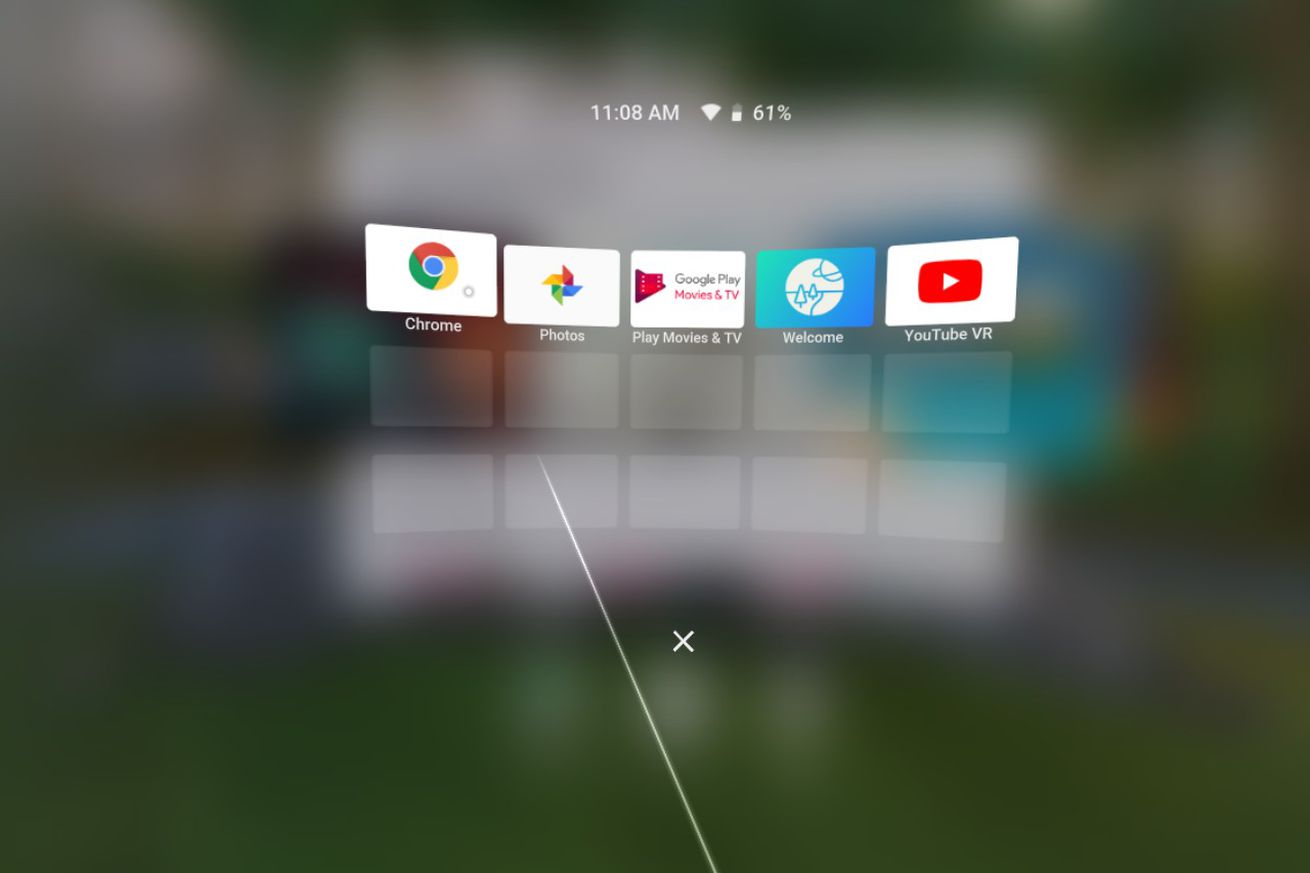
Google Chrome is officially launching on Daydream VR headsets

Google is officially adding the Chrome browser to its Daydream virtual reality platform. As of today, people using the phone-based Daydream View headset or the standalone Lenovo Mirage Solo can access Chrome from their home screens. The VR version of Chrome mostly has the same feature set as its desktop counterpart, but there’s an added “cinema mode” that optimizes web video for VR viewing. Just as importantly, Chrome supports the WebVR standard, so users can access web-based VR experiences on their Daydream headsets.

Daydream users (and users of other headsets) have had access to VR Chrome and its WebVR components for a while, through test versions of the browser or through Chrome’s mobile Android app. But this announcement positions this version of Chrome as a stable, full-fledged browsing app, not an experiment or a conduit for WebVR.

Daydream’s integration with existing Google products has been a selling point for the company, although Google VR apps have spread to lots of headsets; it released a YouTube app for the Samsung Gear VR just last week. There aren’t necessarily people clamoring to shift all their web browsing to virtual reality. But a full-featured web browser is useful for doing things like looking up tutorials for a VR app — especially in a self-contained headset like the Mirage Solo where you can’t just switch back to normal mobile browsing.


from The Verge - Teches https://ift.tt/2vfyW5F

Comments

Popular posts from this blog

Magic Leap is shipping across (most of) the US

As Magic Leap holds the first developer conference for its Magic Leap One mixed reality headset, that headset has started shipping across the contiguous United States, instead of in a set of select markets. The Magic Leap One Creator Edition costs $2,295, just like before, but there’s now an installment plan that starts at $96 per month. All orders are supposed to arrive within 60 days. The Magic Leap One Creator Edition went on sale in early August, and while Magic Leap has touted it as a fully functional device, it’s basically meant for people who want to design apps, games, or art for mixed reality. We were ambivalent toward the hardware, which we found limited, and we noted that Magic Leap hadn’t shown off a lot of material that showcased its potential. The company’s developer conference keynote has revealed several new projects. Among other things, Spider-Man studio Insomniac Games is building an experience that will let you grow a holographic creature on your tabletop, and...

US carriers introduce Project Verify to replace individual app passwords

Four major US carriers — AT&T, Sprint, T-Mobile, and Verizon — are joining forces to launch a single sign-on service for smartphones. The service, called Project Verify , authenticates app logins so that users don’t need to memorize passwords for all their apps. The companies say their solution verifies users through their phone number, phone account type, SIM card details, IP address, and account tenure. Essentially, your phone serves as the verification method with details that are hard to spoof. Users have to manually grant apps permission to use Verify, and it works similarly to how you might log into some services through Gmail or Facebook instead of using a unique account password. Of course, these apps also have to choose to work with Verify, and the program hasn’t listed any partners or when it intends to launch. The service can serve as your two-factor authentication method, too, instead of an emailed or texted code that can be intercepted. Users might not be totally sa...