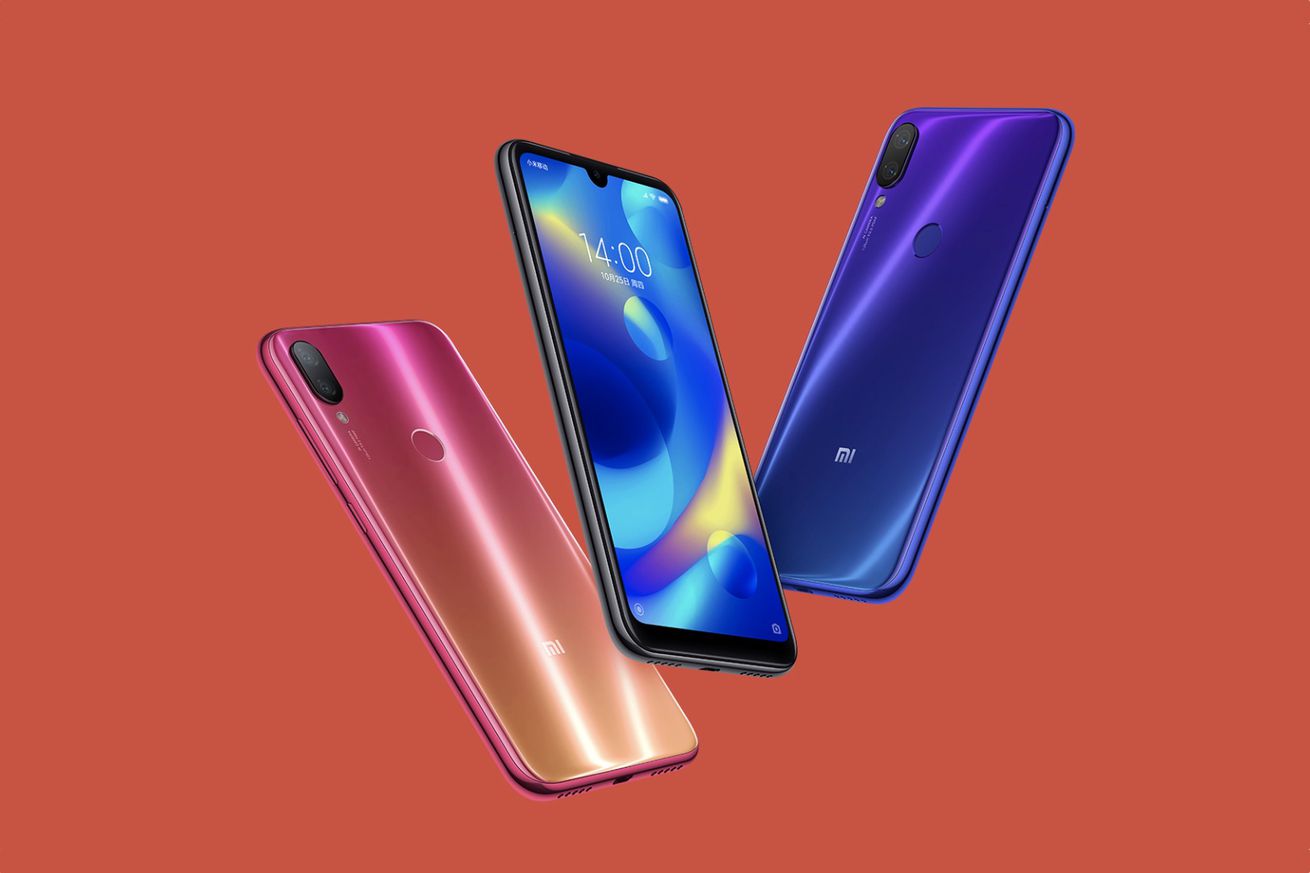
Xiaomi’s new Mi Play features a circular camera notch and dual, rear-facing cameras

Chinese phone maker Xiaomi introduced a new phone — the Mi Play — today, and with it, a new notch. The device features a circular camera notch that’s not a hole-punch design, like we’ve seen on Samsung and Huawei devices, but instead is center-aligned and obvious. It’s a “water droplet” notch that’s very much a notch, even if it’s round. On back, the phone features dual, rear-facing cameras that are vertically-aligned, like Apple’s iPhone X line. The color choices all look lovely with trendy gradient options in purple or red.

Specs-wise, the Mi Play includes:

  • 5.84-inch, 1080 x 2280 display
  • MediaTek P35 processor
  • 4GB of RAM with 64GB of storage
  • 3,000mAh battery with a Micro USB charging port
  • Rear-mounted fingerprint sensor
  • 12-megapixel and 2-megapixel rear-facing cameras

Earlier this year, Xiaomi introduced its notch-less phone, the flagship Mi Mix 3, but that device starts at $475 and relies on a mechanical pop-up camera. The Mi Play, while definitely featuring a notch and large bezels, starts at 1,099 yuan, or $160. It’s unclear whether it’ll ever make it stateside, but that’s a nice price for this design.


from The Verge - Teches http://bit.ly/2GEo9Lf

Comments

Popular posts from this blog

Magic Leap is shipping across (most of) the US

As Magic Leap holds the first developer conference for its Magic Leap One mixed reality headset, that headset has started shipping across the contiguous United States, instead of in a set of select markets. The Magic Leap One Creator Edition costs $2,295, just like before, but there’s now an installment plan that starts at $96 per month. All orders are supposed to arrive within 60 days. The Magic Leap One Creator Edition went on sale in early August, and while Magic Leap has touted it as a fully functional device, it’s basically meant for people who want to design apps, games, or art for mixed reality. We were ambivalent toward the hardware, which we found limited, and we noted that Magic Leap hadn’t shown off a lot of material that showcased its potential. The company’s developer conference keynote has revealed several new projects. Among other things, Spider-Man studio Insomniac Games is building an experience that will let you grow a holographic creature on your tabletop, and...

US carriers introduce Project Verify to replace individual app passwords

Four major US carriers — AT&T, Sprint, T-Mobile, and Verizon — are joining forces to launch a single sign-on service for smartphones. The service, called Project Verify , authenticates app logins so that users don’t need to memorize passwords for all their apps. The companies say their solution verifies users through their phone number, phone account type, SIM card details, IP address, and account tenure. Essentially, your phone serves as the verification method with details that are hard to spoof. Users have to manually grant apps permission to use Verify, and it works similarly to how you might log into some services through Gmail or Facebook instead of using a unique account password. Of course, these apps also have to choose to work with Verify, and the program hasn’t listed any partners or when it intends to launch. The service can serve as your two-factor authentication method, too, instead of an emailed or texted code that can be intercepted. Users might not be totally sa...